All curtains
Sheers, blockouts and wave fold — the full custom curtain range.
Curtains hub
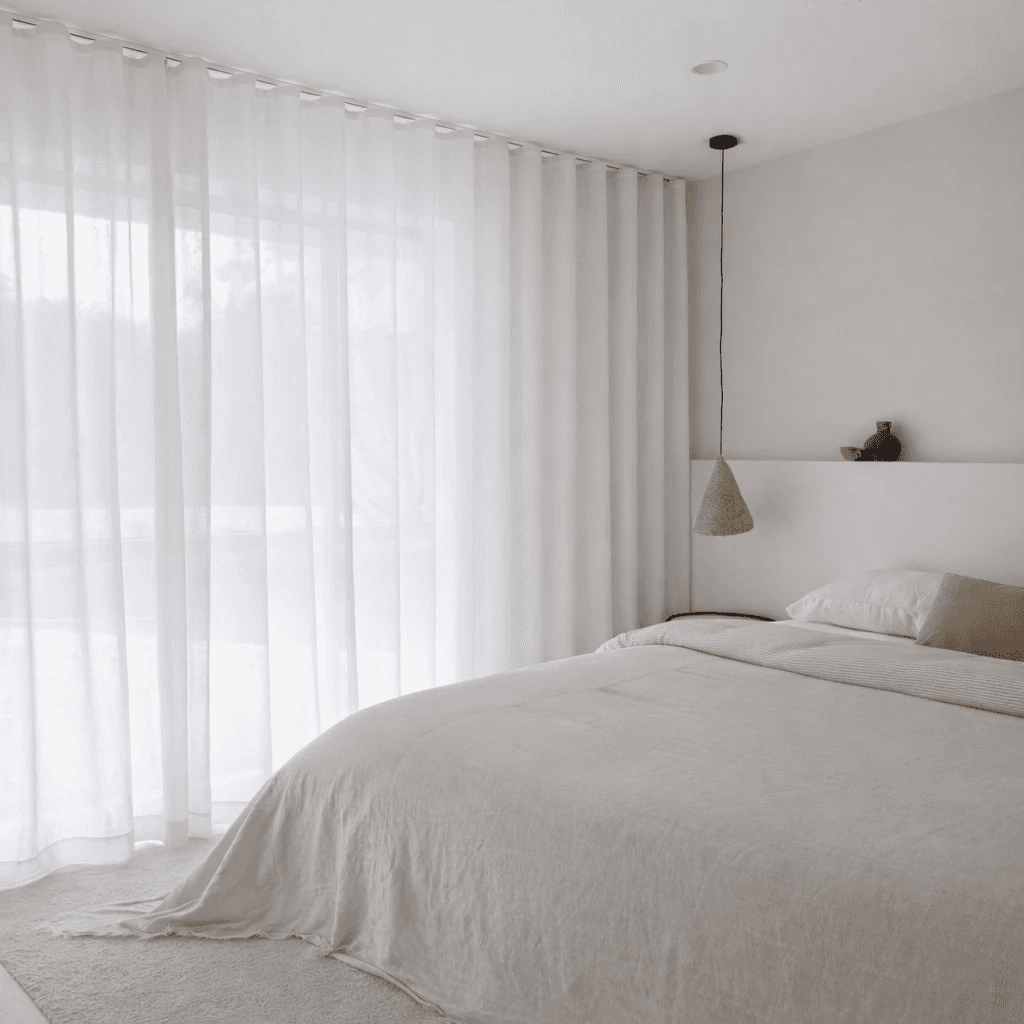
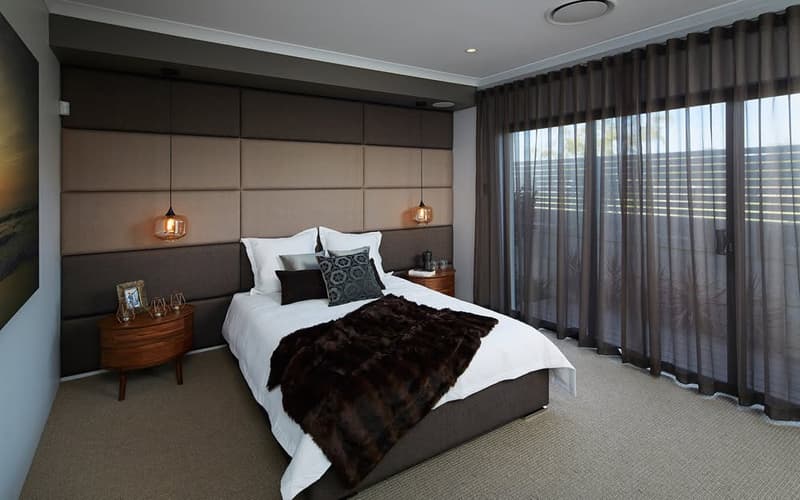
Continuous S-fold waves from a concealed track. The cleanest way to hang a sheer, custom-made for your windows.
The heading style
Wave fold — also called S-fold or ripple fold — is a heading style, not a fabric.
Instead of being gathered or pleated at the top, the curtain runs on a concealed track with carriers spaced at a fixed distance. That spacing forces the fabric into a continuous, even wave that's identical from one end of the track to the other, top to bottom.
The result is a curtain that reads as a single uninterrupted piece of fabric rather than a series of pleats. No visible hardware, no gathered header, no variation in the folds.
In a sheer, it's the difference between "there are curtains here" and a wall of soft light.
Why wave fold
A sheer's job is to make harsh sun usable. The even folds of a wave fold diffuse light consistently across the whole window instead of concentrating it in the flat sections between pleats. On a big north or west-facing window, the difference is obvious.
Contemporary coastal homes are built around large expanses of glass and clean horizontal lines. Pinch pleats fight that. A wave fold's uninterrupted vertical rhythm agrees with it.
When you pull a wave fold curtain open it stacks more compactly than a pinch pleat, so you lose less glass to fabric. On a large window that's a meaningful amount of view.
Pleat styles move in and out of fashion. Wave fold is closer to a structural choice than a decorative one, which is why it's been the default in high-end residential for years now.
Fabric
Sheers vary far more than people expect. What changes:
How much light gets through, and how much you can see out. A tighter weave gives more privacy and a softer light; a looser one keeps more of the view.
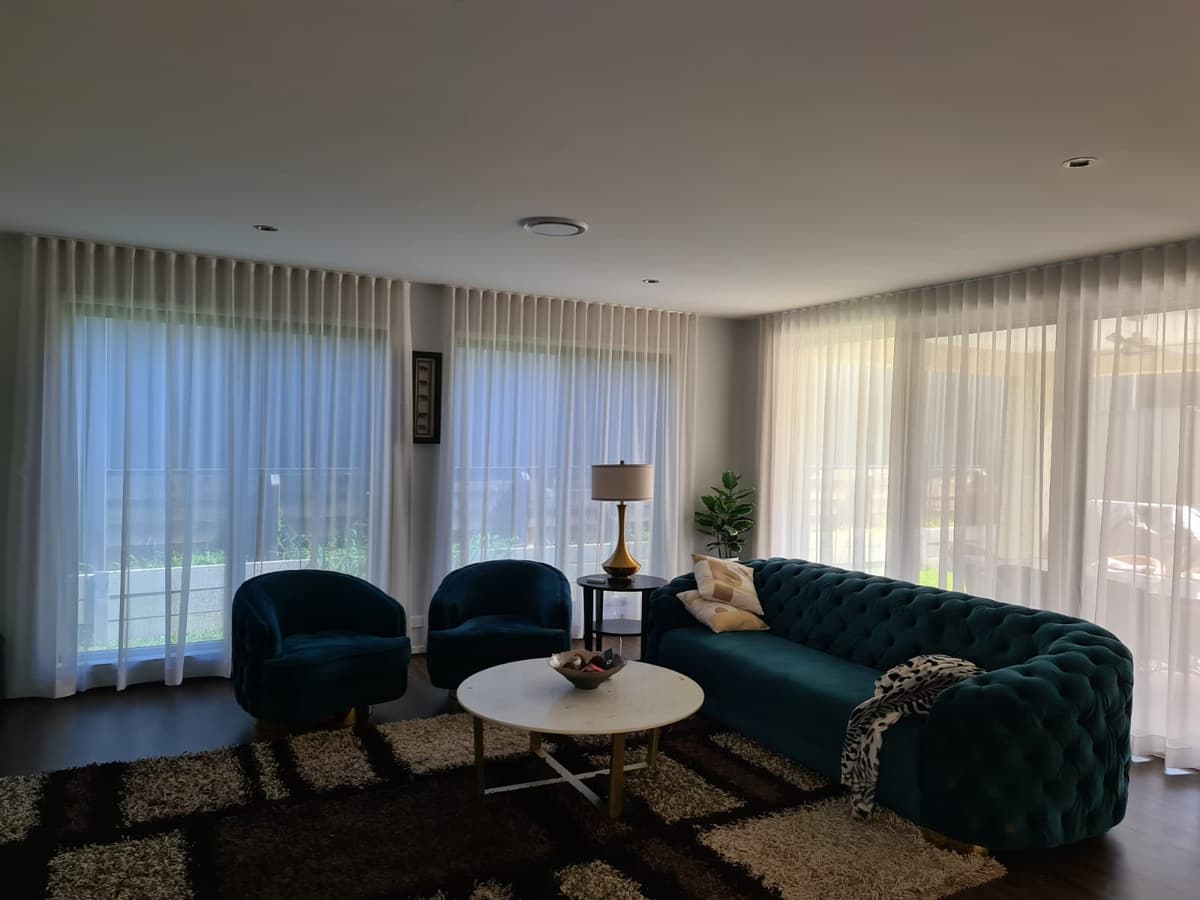
Heavier sheers hold a deeper, more architectural wave. Lighter ones move with the breeze and feel more relaxed. On a big window, heavier almost always looks better.
White reads cool and crisp. Oatmeal, sand and greige read warm and sit better with timber and natural stone. This one genuinely cannot be judged on a screen.
Linen and linen-look fabrics have texture and a slight irregularity that most people prefer. Polyester sheers hold their shape better, resist fading, and cost less. Both are legitimate — it depends on the room and the budget.
We bring the full sample range to your house. Hold them against your own window, in your own light, next to your own walls. It takes twenty minutes and it's the difference between curtains you like and curtains you love.
Hardware
A wave fold only works if the track is right — the wave is created by the carrier spacing, so the hardware is doing the design work.
The premium option. The track sits in a recess so the fabric appears to emerge directly from the ceiling. Needs to be planned before the ceiling is finished, so it suits new builds and renovations.
Mounts to the ceiling or wall. Nearly as clean, far more flexible, and what most retrofits use.
Worth serious consideration on wide runs. A six-metre sheer is heavy and you'll be drawing it twice a day.
We size and supply the track as part of the job. It isn't an add-on.
Layering
Most wave fold sheers we install go in on a double track with blockout curtains behind — usually also wave fold, so the two layers match.
Sheers closed through the day. Blockouts drawn at night. Full control, and the two layers read as one considered piece of design rather than two separate purchases.
The process
We measure the window and the ceiling, check what track will work, and bring the full sheer sample range.
Take your time. This is the decision that matters.
Cut and sewn to your exact drop and width. Wave fold has no tolerance for approximation — the fold spacing has to be calculated to the window.
Track fitted, curtains hung, folds dressed so they hang correctly from day one. We clean up before we go.
About us
Since 1998, same family, same standards.
The person who quotes your job fits it. Nothing lost in a handover.
Most of our range is manufactured in Australia. Better quality control, shorter lead times.
On every product we supply and fit.
Good to know
Nothing — they're the same thing. Wave fold, S-fold and ripple fold all describe a curtain hung from a concealed track in continuous even waves rather than pleats. Different suppliers use different names.
It depends on window width, drop and fabric. A standard-width sheer is typically a few hundred dollars; a full-height sheer across a large living room opening runs into the low thousands. Track and installation are included in the quote.
Yes. The wave is created by carriers spaced at a set distance along a concealed track — a standard rod won't produce it. We supply and fit the correct track as part of the job.
Yes, and lots of homes do both on a double track. Sheer at the front for the day, blockout behind for the night.
Roughly 10–15% of the total width when fully open, depending on fabric weight. Less than a pinch pleat. We allow for it at the measure so the open curtain clears as much glass as possible.
No. Sheers give daytime privacy only — after dark with interior lights on, people can see in. If you need night privacy, you need a blockout layer behind.
We're based in Mermaid Waters and cover the coast from Tweed Heads up to Ormeau — including the suburbs below.
Not sure if we come to you? Give us a call — we probably do.
Approximate service area — call us if your suburb isn't shown.
Also worth a look
Sheers, blockouts and wave fold — the full custom curtain range.
Curtains hub
Lined, heavy, and built to stop light completely. The night layer behind your sheers.
More on blockouts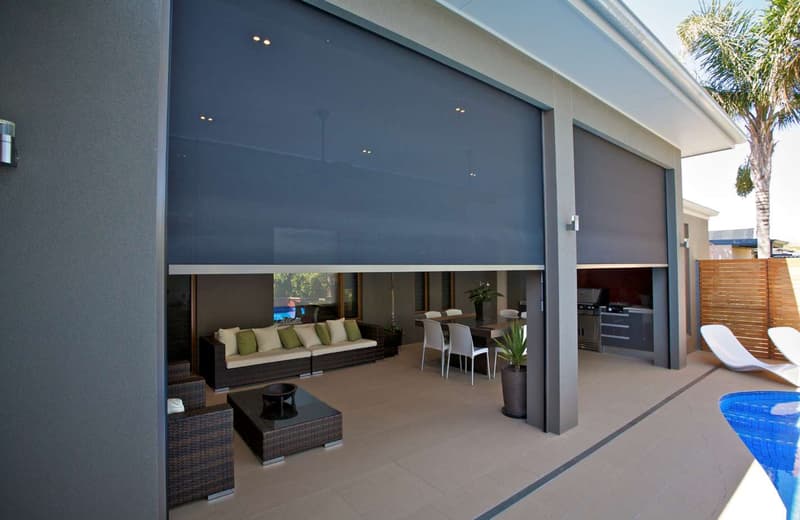
A blockout roller behind a sheer is often cheaper than double curtains.
Explore roller blindsTell us a bit about your windows and we'll be in touch to arrange a time. No obligation, no pressure.
Before you go
Book a free in-home measure and quote — no obligation, no pressure.